Showing posts with label canon. Show all posts

Saturday, January 25, 2020

James, Wisdom, and the New Testament Canon

“If any of you lacks wisdom, let him ask God, who gives to all men generously and without reproaching, and it will be given him.” – James 1:5


Wisdom, the God-given ability to properly act upon knowledge – that is what Christians seek. I would suggest that wisdom has a great deal to do with Christian unity. Once we gain the knowledge God affords us, it will be processing and acting upon that knowledge in the correct way – exercising wisdom – that will restore Christian unity. A better knowledge of the formation of the New Testament canon affords us just such an opportunity. In this article we’ll chart the Church’s reception of the Epistle of James as a case study in the canon and the life changing wisdom to which such knowledge leads us.

The twenty-seven texts that make up the New Testament were inspired the instant they issued from their authors’ quills, but it took approximately three hundred years for them to be recognized as the closed collection we know today. Initially, a local church would have only possessed the New Testament document composed for them or their immediate neighbors. The printing press was fourteen hundred years away. Copies had to be made by hand and walked to their destination. As works began to circulate, it was natural for communities receiving new texts to question the tradition standing behind them. In some places, the testimony to certain works suffered. 

Our first witnesses to the authority of the Epistle of James are indirect. Clement, the third bishop of Rome, after the martyrdom of Peter and Paul, borrowed heavily from James in chapter 30 of his Epistle to the Corinthians (c. AD 95). Scholarship is also able to say that Hermas (the brother of Pius, the ninth Bishop of Rome) also made use of James in the first and third sections of his work The Shepherd (c. 140).  Christianity’s first stab at a NT canon, however, the Muratorian Fragment (c. 155), failed to include James. (Hebrews, 1 and 2 Peter, and 3 John are also missing, with the Apocalypse of Peter substituted in.)

We have to wait until the third century for evidence of James being explicitly referred to as Scripture. Around AD 200, Clement of Alexandria included James, along with the Apocalypse of Peter, Epistle of Barnabas, and the twenty-six other books making up today’s NT, in his attempt at a biblical canon.  Approximately forty years later, Origen, Christianity’s first great biblical scholar, referred to James as “divine scripture” and identified its author as an “apostle” and “brother” of the Lord.  

James place in the NT was still far from solidified. At the beginning of the fourth century, Bishop Eusebius of Caesarea, the father of Church history, identified texts as falling into one of three categories: accepted, disputed, and spurious; James, Jude, 2 Peter, 2 and 3 John belonged to the second group. Pope Marcellus quoted James 3:1-8 as the words of the “Apostle James” in his Letter to the Bishops in the Province of Antioch (AD 308). St. Cyril of Jerusalem and the local Council of Laodicea (c. 363) included James in their canons of Scripture (excluding only the Book of Revelation); and yet, the Cheltenham Canon, written in Africa c. 360, omitted James, as well as Hebrews, 2 Peter, Jude, 2 and 3 John.

The great watershed moment in the history of the New Testament was St. Athanasisus’ Thirty-Ninth Festal Letter. The Easter letter penned by this bishop and champion of orthodoxy in 367 A.D. was the first time that all twenty-seven books of the New Testament – and only those twenty-seven books – were listed together. This same canon was affirmed by the local Council of Hippo (393), St. Augustine in his On Christian Doctrine (397), and the local Council of Carthage (419).  The latter, attended by St. Augustine and over two hundred bishops, ruled that, “besides the Canonical Scriptures nothing be read under the name of divine Scripture.” They then listed the forty-six books of the Old Testament and twenty-seven of the New, ending with, “For the confirmation of this canon, the church across the sea [i.e., Rome] is to be consulted.”  Pope Boniface’s subsequent approval of their directives effectively settled the question of the canon until it was reopened by Luther.

This brief history of James’ acceptance among Christians serves as a case study in the formation of the New Testament. James, originally written to Jewish-Christians, was recopied and carried by hand to distant communities (composed of Jews and Gentiles) such as Rome and Alexandria. Over the next two hundred years, some who received the epistle questioned its provenance. Those bishops in whose churches James had been handed down as an apostolic work and proclaimed in the liturgy gave authoritative witness to the tradition they had received. That witness was accepted by their brother bishops and a consensus was reached. In union with their head, the Bishop of Rome, they delineated which books were to be regarded as Scripture in the Church. The bishops’ apostolic authority was the Holy Spirit’s instrument for giving the canon of Scripture to the Christian faithful.

That has serious repercussions for anyone who looks to the Bible as a source of God’s Revelation, because whenever a Christian recognizes the New Testament as a closed, fixed body of literature, he implicitly acknowledges the Catholic bishops’ authority to speak for Christ. And if the bishops spoke on Christ’s behalf to authoritatively settle the canon of Scripture, then on what grounds do we deny their authority to interpret it? You see, all of the key figures in the formation of the canon were unabashedly Catholic. They clearly taught that:

  • Bishops are the successors of the apostles (Clement of Rome, Hermas, Clement of Alexandria, Origen, Athanasius, Augustine)
  • the bread and wine of the Eucharist are transformed into Jesus’ body and blood, making present His sacrifice (Clement of Rome, Clement of Alexandria, Origen, Cyril, Athanasius, Augustine)
  • serious sin must be confessed to God through the ministry of the presbyters (Origen, Athanasius, Augustine);
  • final salvation is not just a matter of faith, but works (Clement of Alexandria, Origen, Augustine)
  • the souls of the dead often require further purification and benefit from our prayers (Cyril of Jerusalem, Augustine)

None of these great lights saw any opposition between such beliefs and the teaching of Scripture. In fact, these beliefs were integral to Christianity long before congregations were equipped with a twenty-seven book New Testament! Such knowledge is life-changing, and acting upon it can heal centuries of division within Christianity. Such knowledge can be difficult to act upon, though. Often times, it requires great humility and sacrifice. I will give James the final word, “If any of you lacks wisdom, let him ask God, who gives to all men generously and without reproaching, and it will be given him. But let him ask in faith, with no doubting, for he who doubts is like a wave of the sea that is driven and tossed by the wind. For that person must not suppose that a double-minded man, unstable in all his ways, will receive anything from the Lord” (Js 1:5-8).

Thursday, October 17, 2013

The Bible - Why Do Christians Have Different Old Testaments?


Every great once in awhile you will see me quote from books that are excluded from non-Catholic (and non-Eastern Orthodox) editions of the Bible. Non-Catholic brothers and sisters refer to these writings (Tobit, Judith, Wisdom, Baruch, 1 & 2 Maccabees, an additional 107 verses to the Book of Esther and two chapters to the Book of Daniel) as the Apocrypha, while we Catholics refer to them as the “Deutero-canonicals.” Initially I came to accept their inspiration because of the resonance I found between them, as a group, and the rest of Scripture. Most convincing was a passage I had “happened upon” in Wisdomthe most explicit prophecy of Christ I had seen.  I couldn’t ignore such prophetic precision. I was grateful to the Holy Spirit for letting me find this and wanted to understand why Christians disagreed over the Old Testament.
Through reading and talking with others I learned several interesting facts. First, that the Protestant Old Testament matches that of today’s Jewish community; the Protestant Reformers considered it to be more authentic. Second, that St. Jerome, probably the greatest biblical scholar of the first three centuries, chose to distinguish these books from the rest of the Old Testament in his Latin translation, labeling them “ecclesiastical” as opposed to “canonical.” These things would seem to argue against the deutero-canonicals acceptance, but there’s another side to consider.

So far as the Jewish canon of Scripture goes, it was not decided until close to 200 A.D. (See Lee Martin McDonald and James A. Sanders, The Canon Debate, p. 146-162.) All of this took place after the fall of Jerusalem and the expulsion of Christians from the Synagogue. Prior to the that time the Old Testament canon was not “set in stone” and was larger than today’s; this was the Old Testament used by the Apostles and the early Church. The Anglican scholar, J.N.D. Kelly writes,
 … the Old Testament thus admitted as authoritative in the Church was somewhat bulkier and more comprehensive than the ... books of the Hebrew Bible of Palestinian Judaism ... It always included, though with varying degrees of recognition, the so-called Apocrypha, or deutero-canonical books. The reason for this is that the Old Testament which passed in the first instance into the hands of Christians was not the original Hebrew version, but the Greek translation known as the Septuagint.
The Greek translation, begun about 250 B.C., and which included the deutero-canonicals, was what the Church used in her worship and study; after all, Christians were predominately Greek-speaking. When the Apostles quoted from the Old Testament in their epistles the Septuagint was generally what they used, “Of the 350 quotations of the Old Testament found in the New Testament, 300 are taken directly from the Greek Septuagint Bible” as opposed to the Hebrew.[2] Thus, the Christian Church had been making use of an Old Testament containing these books for some sixty years before the Jewish rabbis officially excluded them. 

It must be recalled that at the time the rabbis set their canon they were no longer the world’s teachers; that role had been passed to the Apostles and their successors. When Jerome expressed doubts about the canonicity of the deutero-canonicals a few centuries later, he did so as a scholar living in Bethlehem and performing his translation of the Old Testament alongside rabbis; as such he was susceptible to their opinions. Jerome was free to ask these questions; for although the books had come down to the Church from apostolic times, a formal Church statement (from Peter’s successor or an Ecumenical Council) had never been made regarding the Old Testament canon. The local councils of Hippo (393 A.D.) and Carthage (419 A.D.), the latter presided over by St. Augustine, declared the deutero-canonicals to be part of the Old Testament. The decrees of the Council of Carthage received a “semi-binding” status in the minds of most Christians when Pope Boniface gave them his approval.[3] 

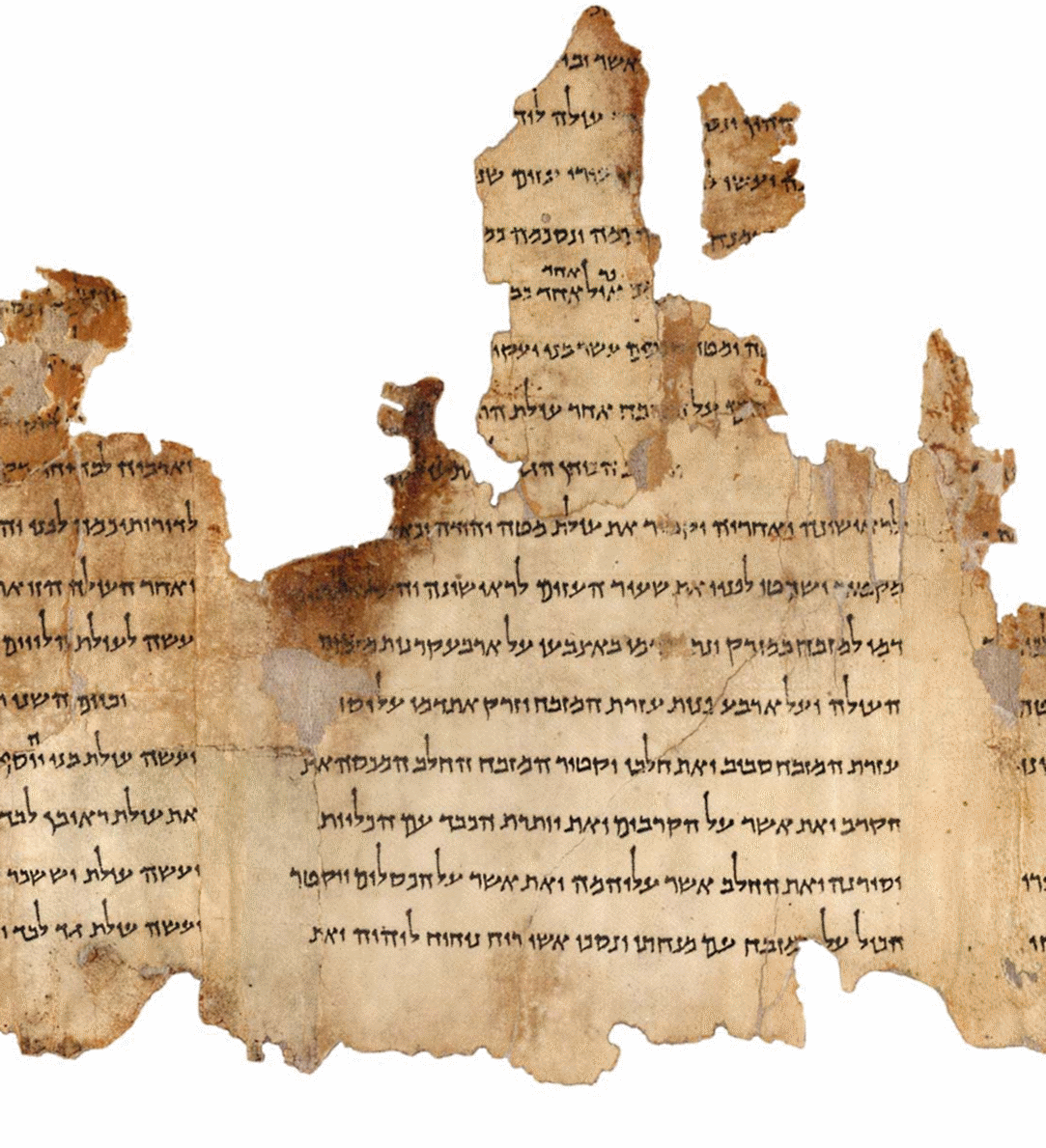
Now one last objection which I have heard from Protestant brothers and sisters to the Apocrypha is that Jesus did not quote from it as He did the rest of the Old Testament. This objection has two large holes in it, however. First, if quotation from Jesus, or the Apostles after him, as recorded in the New Testament, were our criteria for including books in the Old Testament then all Christians would have to slim their Bibles. They would no longer contain Ecclesiastes, Obadiah, Zephaniah, Judges, 1 & 2 Chronicles, Ezra, Nehemiah, Lamentations, or Nahum.[4] Second, I maintain that Jesus and the Apostles did draw from the deutero-canonicals and have included many of the parallels in Appendix IV of The God Who is Love: Explaining Christianity From Its Center. In addition, fragments of Sirach in Hebrew and Tobit in both Hebrew and Aramaic, as well as Baruch in Greek, were found among the Dead Sea Scrolls - evidencing their use in the Palestine of Jesus' day.

UPDATED:  Did you know that there was a danger of Christians having a different New Testament as well?  To read more, scroll to the second half of this post.


[2]Rumble, Leslie and Charles M. Carty, Bible Quizzes To A Street Preacher,(Rockford, Illinois: Tan Books and Publishers Inc., 1976), p.4
[3] Graham, Henry G., Where We Got the Bible: Our Debt to the Catholic Church ( Rockford, Illinois: Tan Publishers), p.37.
[4] Shea, Mark P., By What Authority? : An Evangelical Discovers Catholic Tradition, (Huntington, Indiana: Our Sunday Visitor, Inc., 1996), p.62.