Showing posts with label TAN Books. Show all posts

Friday, August 5, 2022

God's Timing: The Story of a Book

Each of us has dreams that we work to see realized because we believe God has planted them in our souls. We become confused, however, when obstacles arise. We ask ourselves whether these dreams have their source in the Lord or in our own wishes. I had an experience like this that I want to share.

In the summer of 2014, I approached a handful of Catholic publishers with an outline and sample chapters for a book on consecration and devotion to Mary’s Immaculate Heart. The book was to be a fusion of apologetics and devotion, grounding Marian consecration and other expressions of devotion to the Immaculate Heart (e.g., the Rosary, wearing the Brown Scapular, First Saturdays) in Scripture: all elements that flow to us from the earthly lives of Jesus and Mary. I had just finished a book on the human prayer of Jesus, and this seemed to be the natural next step in my writing. Plus, if I started working immediately, a publisher would be able to offer it to readers in time for the Fatima centenary in 2017. The only problem was that all of the publishers I contacted were either just releasing books on the Blessed Mother, or my focus wasn’t what they were interested in publishing at the time.

As summer turned to fall, I took these difficulties to prayer. I recall lying in bed one night and saying, “Lord, I felt like this book about the Blessed Mother was something You wanted me to do, but I could be wrong. Maybe You don’t want me to write any more books. And honestly, that is fine. If You would let me know, though, one way or the other, I would be very grateful.” As I continued to lie in bed, a friend’s words came back to me.

My pal Tony, a coworker, had been reading the Epistle to the Hebrews and dropped by my room every now and then to ask me a question about the text. In the course of our conversations, I shared how, over a decade before, I had developed a five-part study on Hebrews for a prayer group and occasionally thought of turning that into a book. Tony loved the idea and, when he returned the following week with another question remarked, “Man, I hope you write that book!” As I laid in bed praying, those were the words that popped into my head. I realized that if I did pursue the topic, I would want it to focus upon seven elements in Hebrews instead of my original five. Hmm...was this something the Lord wanted me to pursue?

I received the Lord’s answer two days later, in the form of an email from my friend and collaborator, Dr. Kevin Vost: “In your last email you mentioned St. Thomas, and I seem to recall your special interest in Hebrews. Well, when I ordered the beautiful Latin and English Commentaries on the Letters of Saint Paul, they "accidentally" sent me two copies of St. Thomas's Commentary on Hebrews and did not request it back. I supposed the other was for you, so I've been holding this to give to you if you don't already have a copy.” Within a week I had contacted Angelico Press with the proposal for The Epistle to the Hebrews and the Seven Core Beliefs of Catholics and received the green light to proceed. The book was released in May, 2016 and was so well received that, by August, Marcus Grodi and I were discussing it on EWTN’s The Journey Home!

I continued to purchase and read books about the Blessed Mother and Marian Consecration, adding to my notes, in the hope that the Lord might still allow me to write on the subject. Again, however, the timing didn’t seem right. Before the end of 2016, the Lord opened the door to publish a book on “marrying” the praying of the Rosary to that of the Divine Mercy Chaplet. I then found myself starting work on a master’s program in theology, and soon thereafter writing a book on the Epistle of James that was released in 2021.

Shortly after its release, my dear friend Michael Vento phoned to say that he had been catching up with an old buddy who had just gone to work as a content manager at TAN Books. Michael knew of my desire to write about a book on Marian Consecration and, thinking that TAN would be a good fit, said he would like to introduce me to this editor.

Perhaps a month later I received an email, completely out of the blue, from a content manager at TAN Books named Patrick O’Hearn. The gentleman who edited my book James for another publisher had been approached by TAN with a special project – updating the entire text of a large, older catechism with footnotes referencing the 1994 Catechism of the Catholic Church. He was not able to take on the job for TAN but, for some reason, recommended that they contact me about it. Patrick O’Hearn . . . that sounded like the same name that my friend Michael had mentioned to me. (A quick call to Michael confirmed that it was, but he had not yet had the chance to speak to Patrick about me. Needless to say, I sensed the Lord’s hand.) I emailed Patrick back to say that I was interested in hearing more about the Catechism project and told him how we shared a mutual friend. As Patrick and I began to correspond, I mentioned the book on Marian Consecration and how, once I completed the editing project, I would love to submit a proposal to TAN. He asked me not to wait but to go ahead and send it. Three months later we had signed a contract stating that I would deliver a completed manuscript by December 1, 2022. 

Ah, but that was not the end of the story. I went to work on the manuscript in August 2021, and completed my first draft on January 1, 2022 – giving me eleven months to make changes before the due date. I still felt driven to work and completed my content editing by February. I shared the manuscript with a few trusted friends; and as they began reading, I started double-checking my thousands of scriptural citations. Then, completely out of the blue, on March 15, Pope Francis announced his intention to consecrate Russia and Ukraine to the Immaculate Heart on the Solemnity of the Annunciation! He asked the world’s bishops and all of the world’s faithful to gather in their parish churches and join him in the consecration. As I was at Mass the weekend before the consecration, the thought occurred to me to contact TAN and see if, since the manuscript was ready, they wanted to move it into production. They did. I had until the end of the week – the same week I was already scheduled to be off work for spring break – to finish checking scriptural citations. TAN immediately went to work and this October, the month of the Rosary, The Biblical Roots of Marian Consecration: Devotion to the Immaculate Heart in Light of Scripture will be released.


I share this story because I want to encourage you: Yes, God truly grants us the deepest desires of our hearts. But He does so in a far better way than we could envision. He is the Lord of time, Who with infinite wisdom moves each piece into position. We walk in the darkness of faith, but with the firm conviction that darkness is not dark to Him; rather, it is as bright as day (Ps 139:12). I do not know the next step or even how many steps I have left in this world, but I know that I have great reason to trust Him - as do you. “He who did not spare his own Son but handed him over for us all, how will he not also give us everything else along with him? . . . What will separate us from the love of Christ? Will anguish, or distress, or persecution, or famine, or nakedness, or peril, or the sword? . . . No, in all these things we conquer overwhelmingly through him who loved us. For I am convinced that neither death, nor life, nor angels, nor principalities, nor present things, nor future things, nor powers, nor height, nor depth, nor any other creature will be able to separate us from the love of God in Christ Jesus our Lord” (Rom 8:32-39).


Friday, July 15, 2022

Interview with Patrick O'Hearn


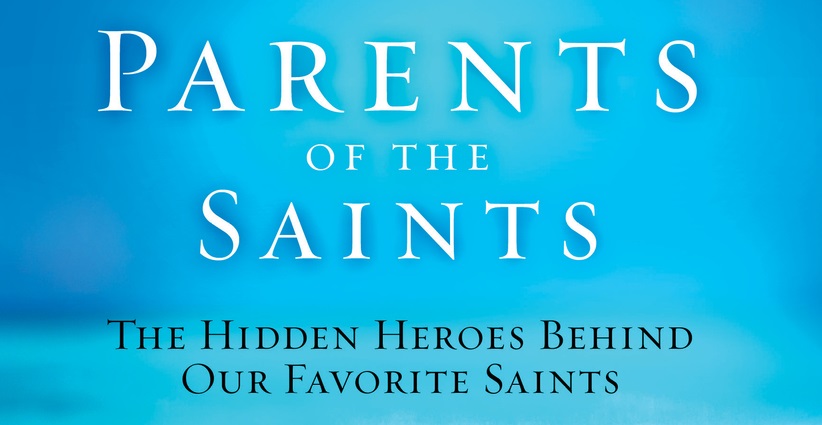
As Catholic parents we want to do absolutely everything in our power to help our kids develop a relationship with the Blessed Trinity that will sustain them into eternity. In short—we want to raise saints. But how do we do that? Well, I recently met a gentleman, Patrick O’Hearn, who spent the last three years trying to figure that out. He looked to the people who had already done it—fifty sets of parents who raised canonized saints. The fruit of his exhaustive research is the new book, Parents of the Saints: The Hidden Heroes Behind Our Favorite Saints. He was gracious enough to answer a few questions for readers.

Shane Kapler: Patrick, I’m sure that the first thing readers will want to discover from your extensive research is whether or not you were able to identify consistent characteristics in the lives of these parents; and if so, what were they?

Patrick O’Hearn: Holiness was the most consistent theme, and it was manifested in seven identifying characteristics, or what I call “hallmarks.” Each of the seven hallmarks is given its own chapter in the book: (1) Sacramental Life, (2) Surrender, (3) Sacrificial Love, (4) Suffering, (5) Simplicity, (6) Solitude, and (7) Sacredness of Life. Certainly there were other virtues, such as humility and courage, but these were incorporated in the hallmarks above. These hallmarks were passed onto their children, the saints.

Kapler: You structured your book in such a creative way. Instead of relating the lives of one set of parents and then moving onto the next, you structured your book around the hallmarks identified above, and then circled back, chapter after chapter, to show how the hallmark was concretized in the same core group of parents. The effect was that, by the end of the book, I experienced this growing intimacy with these parents of the saints. What couples did you develop the deepest “friendship” with while writing the book?

O’Hearn: Saints Louis and Zélie Martin, the parents of St. Thérèse are my favorite parents of the saints because we have shared many of the same experiences and trials, such as wanting to be in religious life, and also losing children. During college when I was actively discerning religious life, I used to jokingly call St. Therese my girlfriend. But after God called me to marriage, St. Therese was pointing me to her parents. I also have a great love for St. Jose Maria Escriva’s parents. They too experienced setbacks and trials, but Jose’s father was said to have kept his cheerfulness. 

Kapler: I thought I knew a fair amount about the home life of Thérèse of Lisieux, but you provide details I’d never come across before. For example, the death of Thérèse’s sister Mélanie-Thérèse was a particularly difficult cross for her parents. Would you share a bit about her passing and how her parents were able to continue on?

O’Hearn: St. Therese’s sister Mélanie-Thérèse died due to neglect from St. Zélie’s wet nurse. Later in life, Zélie had a condition which prevented her from breastfeeding, and which eventually led to her death in her mid-forties. When she lost Melanie-Therese, St. Zélie experienced what we call today, Post Traumatic Stress Disorder. She refused to pass by the house where her daughter died.  Thanks be to God, she did have another baby in her future – St. Therese, who was named after her departed sister. What helped St. Zélie the most was the hope that she would see her little ones in Heaven. Saint Zélie and her saintly husband lived for Eternity. They knew this life was temporary, but still the pain of losing four children weighed heavily on their hearts. Without faith, St. Zelie could have easily abandoned God. 

Kapler: As I was reading, I couldn’t help but feel my own inadequacies as a parent. How do you respond to the parent who says, “I’ve already blown it”?

O’Hearn: These parents of the saints were not without their own faults. They made many mistakes, which we can all learn from, such as letting society or secular relatives influence their children. They were not perfect, but they imperfectly sought perfection.  Some of them even had children that left the Faith. But what separated them from most parents is that the Holy Eucharist and Marian devotion were everything to them. Above all, they longed for Heaven, and wanted their children to be with them in Eternity to praise God forever. And so, when we read their lives, we ought to be inspired by their great holiness, but at the same time, aware that they too struggled with their weaknesses and sins.

Kapler: Patrick, Parents of the Saints both challenges and encourages me; you’ve given me a lot to mull over. Thanks for taking time out to share some of the fruits of your research with us.

Saturday, April 25, 2020

Book Review: Cardinal Newman's "Meditations on Mary, Our Mother"


I jumped at the chance to review this book. Two decades ago, I read TAN Book’s Mary: The Second Eve, a compendium of Newman’s apologetic writings on the Blessed Mother and was mesmerized by the way he showed that the earliest post-apostolic writings simply made explicit what was already present in the text of Scripture. His knowledge of the Fathers was voluminous. This new work assembled by TAN’s editorial team casts its net wider to bring together key points from Newman’s apologetics with his devotional thought.

As with all of his works, Meditations on Mary, Our Mother reminds us that Newman was a master of the English language. When we turn from him to modern works, we are reminded of how far we've fallen:
"[The saints'] acts, callings, and relations below, are types and anticipations of their present mission above...The only question is whether the Blessed Virgin had a part, a real part, in the economy of grace, whether, when she was on earth, she secured by her deeds any claim on our memories? If she did, it is impossible we should put her away from us, merely because she has gone hence, and should not look at her still according to the nature of her earthly history, with gratitude and expectation." (p.41)
Yes, Newman would have been a thorn in the side of many a modern editor. "But John, you have to remember that most books are written at a fifth grade level!"

Like TAN's previous compilation, Meditations on Mary, Our Mother displays Newman's brilliance as an apologist. It does not, however, contain the lengthy quotations from the Fathers present in the earlier work. Instead, as the title of this new collection indicates, we are treated to Newman's devotional thoughts, his effusions of love in honor of Our Lady:
"We must not only pray with our lips, and fast, and do outward penance, and be chaste in our bodies; but we must be obedient, and pure in our minds. And so, as regards the Blessed Virgin, it was God's will that she should undertake willingly and with full understanding to be the Mother of Our Lord, and not to be a mere passive instrument whose maternity would have no merit and no reward. The higher our gifts, the higher our duties. It was no light lot to be so intimately near to the Redeemer of men, as she experienced afterwards when she suffered with Him." (p.23)
Newman's apologetic thought circles around Mary's identity as the New Eve. He finds it in both Scripture (Genesis 3, John 19, Revelation 12) and the Church Fathers:
"...the parallelism is the doctrine of the Fathers, from the earliest times; and, this being established, we are able, by the position and office of Eve in our fall, to determine the position and office of Mary in our restoration." (p.17)
Newman notes this identification in the works of Justin Martyr (150 A.D.), Irenaeus (180) and Tertullian (200), men from different geographic regions. From this, he carefully reasons that this understanding had to form part of the original apostolic deposit. And from it he deduces a host of important points:
"Eve made room for Adam's fall, so Mary made room for our Lord's reparation of it. Thus, whereas the free gift was not as the offence, but much greater, it follows that, as Eve co-operated in effecting a great evil, Mary co-operated in effecting a much greater good." (p.19) 
"I do not see how anyone who holds the Catholic doctrine of the supernatural endowments of our first parents has fair reason for doubting our doctrine about the [immaculate conception of the] Blessed Virgin Mary...I ask: Have you any intention to deny that Mary was as fully endowed as Eve? Is it any violent inference, that she, who was to co-operate in the redemption of the world, at least was not less endowed with power from on high, than she who, given as a help-mate to her husband, did in the event but cooperate with him for our ruin?....There was war between the woman and the Serpent. This is most emphatically fulfilled if she had nothing ot do with sin - for, so far as anyone sins, he has an alliance with the Evil One." (p.67, 65, 72)
I could go on and on, but it's far better to read this gem of a book for yourselves. Reading Meditations on Mary, Our Mother is akin to ascending a height via an upward, circular path. Themes are revisited and built upon as you progress through the meditations. It is spiritual reading appropriate to any time in the liturgical year.


Wednesday, September 4, 2019

Author Interview: Jesse Romero

It is hard to miss the buzz in Catholic quarters surrounding well-known evangelist Jesse Romero’s new book, The Devil in the City of Angels: My Encounters with the Diabolical (TAN Books, 2019). What caught my attention in Romero’s story was how he first encountered demonic spirits not in his work as a Catholic evangelist but earlier, in his career as a Los Angeles deputy sheriff. He witnessed supernatural manifestations that police academies never dream of addressing with their cadets; but these encounters helped propel him deeper into his Catholic faith. As Jesse’s faith matured and he began sharing the gospel, his path crossed a number of others – baptized Christians – whose involvement in the occult opened them to demonic oppression and possession. Romero accumulated a wealth of knowledge regarding spiritual warfare, and he was gracious enough to answer a few questions for readers.

Shane Kapler: With Scripture and the Catechism being so clear on Christians not having anything to do with seances, astrology, psychics, etc., why do you think so many Christians still dabble in the occult? And as a follow-up, what are the occult practices in which they most frequently engage?

Jesse Romero: Baptized Christians are hungering for the mystical and other worldly, we were hard wired that way.  Many people are simply 'curious', just like Eve, that’s what got her in trouble, wanting to discover the unknown. Many people are drawn to the occult because they are low information Americans who have a malformed, uninformed, misinformed conscience and the allure of the occult is all around: psychics, tarot card readers, fortune tellers, healers online and also renting a storefront in your neighborhood. You also have the pop culture (music, movies) that promotes that occult as well as the best-selling 'Harry Potter books.'  Tempting people to dabble in the occult is one of the ordinary activities of demons.

Kapler: You write a great deal about spiritual warfare. What type of spiritual warfare is reserved only for exorcists, and what type is the work of the laity? Is there a line that the laity does not have the spiritual authority to cross?

Romero: Priest have the authority to engage in healing, deliverance and exorcism. There are two types, a minor and a solemn exorcism. Any priest can engage in minor exorcism, a solemn exorcism requires the permission of their bishop. Lay people can help priest in healing, deliverance and exorcism as support and intercessors. A priest has universal authority to heal and liberate a person from the diabolical, while a lay person has authority over those under his authority. A husband and father has authority to pray healing and deliverance prayers over his wife and children. Lay people can pray healing and deliverance prayers for themselves. The ones that I have been praying every day for over ten years are the www.auxiliumchristianorum.org prayers.

Kapler: In the gospels, Jesus exorcised demons with a simple command. We see Paul appearing to do the same with a spirit of clairvoyance in Acts 16. Would you share your thoughts as to why exorcisms today are a much more protracted process? Why does the rite of exorcism often need to be repeated a number of times for a person to finally gain freedom?

Romero: Several reasons, first, more people are living in mortal sin, there are less baptisms, less couples marrying in the Church, so that means there are less people praying in the Church Militant. Exorcist have told me that this effects their prayer sessions. Also, most energumens (possessed) people continue to live in mortal sin, therefore the demon may get driven out through the session but they come right back because the person lacks sanctifying grace in their soul which keeps them out. Many peoples’ lives are so disordered; they do not have properly formed consciences based on the Word of God and their wills are weak as a result of habitual sin. Therefore, they lack the courage and fortitude to follow the exorcist protocol to live in a state of grace. Ninety percent of the deliverance is done by the spiritually afflicted person; ten percent of it is done by the priest. Exorcism is not magic; it’s hard work which requires the spiritually afflicted person, by an act of the will, to fully cooperate in pursuing a life of holiness.

Kapler: In your book you share your own experience in deliverance ministry, how to arm ourselves against the devil's activity in our lives, as well as ending the book with prayers you have found very effective in countering the demonic. If someone finishes your book and wants to receive further, solid formation in this area, where would you send them or what written resources do you recommend?

Mr. Romero: The three books on Catholic spiritual warfare that I would recommend are:
1. Deliverance Prayers for the Laity by Fr Chad Ripperger
2. Manual for Spiritual Warfare by Paul Thigpen
3.  Lord Prepare My Hands for Battle by Jesse Romero 

Kapler: Thank you so much, Jesse.

Monday, March 18, 2019

Exposing the Anti-Mary: Author Interview with Carrie Gress


In his first epistle, the Apostle John wrote, “as you have heard that antichrist is coming, so now many antichrists have come” (1 Jn. 2:19). St. Paul wrote of a final antichrist, “the man of lawlessness…the son of perdition” who will arise prior to Christ’s return (2 Thess. 2:3).The spirit of antichrist has been sowing its seeds in the world from the first century until now. In her fascinating new book, The Anti-Mary Exposed (TAN Books, 2019), Dr. Carrie Gress takes aim at a specific aspect of this anti-Christian spirit, one that, since the 1960s, has distorted the vision of authentic femininity found in Christian Revelation and enfleshed in the Blessed Virgin Mary.

Dr. Gress marshals a mass of scholarship, presented in easily-accessible language, to detail the cultural shift brought about by a small group of elite American women. They convinced an entire generation of women that they could not be “equal” to men, could not lead “fulfilling” lives until the relationship between mother and child was disrupted. In 2019, we live with the deadly fruits of this revolution: sixty million abortions, skyrocketing divorce rates, an increase in female depression, anxiety, STDs, and substance abuse.  Gress also boldly proclaims the answer to the culture of death: Christ, Truth incarnate, and Mary, his mother and partner in redemption. It is an incredibly book, and I was honored to interview Dr. Gress:

Shane Kapler: Dr. Gress, you pull back the curtain on the ideological roots of the modern feminist movement as well as the personal lives of many of its leaders. As I was reading these revelations - Marxism, childhood abuse, diagnosed mental illness, substance abuse, the occult and pagan liturgy - I remember thinking, "I have friends that I want to share this information with, but they are never going to believe me." What did you, personally, find most shocking?

Dr. Gress: I did this research over two years, so I can imagine the experience of reading all of this over a couple of days. I think what was most shocking to me was our ignorance of the brokenness of second wave feminists. Women like Betty Friedan, Kate Millet and Gloria Steinem are held up for us as role models. Why don’t know about the depth of their brokenness and what it was they were responding to? The reality of who they were has been shielded from us. They considered themselves “Lost Girls.” Almost to a one, they had deep issues with their mothers. They all had major emotional trauma that they struggled with; and yet, these are the women who have led us to what we understand femininity to be in our culture. The fact that this hasn’t been scrutinized, talked about, and even rejected – that was what was most surprising to me.

Kapler: In your book, you point out how, when an ideology fails to deliver on its promises, and people begin to point out its faults, its adherents claim that we simply haven’t gone far enough. They place the blame on the fact that the ideology hasn’t been embraced by everyone. Do you think this it part of our rejection of God, that rather than turning back to him in him in humility and repentance, we keep soldiering further down this road?

Carrie Gress, Ph.D.
Dr. Gress: I think it is part and parcel of an ideology. We saw this very clearly among the Soviets, “Things will just start working once there is more Marxism,” or “once we are more egalitarian.” There is this push, and it becomes so strong that people are almost spellbound by it. One of the things I’ve come to see, and around feminism in particular, is a realization that women approach the world with a certain set of presuppositions: “I need to be more assertive. I need to assert my individuality. I need to compete with men.” What happens actually is that women begin taking on certain vices – rage, aggression – and it ends up making things worse. People don’t want to be around a woman who is really angry.

This pattern is striking to me; and I hear it among Catholic women, too. “When I’m dealing with men I try to be more assertive and not let them think they have the upper hand.” We’ve bought into the ideology enough that we think we need to compete with men. These are not the things that make people want to have deeper relationships with us. What has happened with feminism is that we have created this shell around ourselves, and people don’t want to engage because it’s not kind, it’s not compassionate, it’s not other-centered. All of these great virtues that women have; we’ve kind of been told, “Put those away. You don’t need those.” Women are embracing these broken pieces of feminism and womanhood that they are being offered, without realizing how it has this effect of cutting their feet out from underneath them.

Kapler: What is authentic feminism today? What ways are women being authentically discriminated against today?

Dr. Gress: That’s a difficult question to answer, because victimhood has become such a popular status to have in our culture. It’s hard to see what authentic injustice is and what is a manipulation of people. But I think that, if we can step aside from those realities, the biggest injustice is how women have been convinced that the only way they can get ahead is by making their children and families the enemy, making anything that gets in the way of their career the enemy. If we are going to talk about an actual injustice to women, it is that lie. That lie – that our children are obstacles to our success -- has permeated our culture without anyone pointing out how radical an idea it is, and how it had never been introduced into human culture before.  We have embraced slogans like “Shout Your Abortion” wholeheartedly, and treat it like it is some sort of native human right, because without abortion a woman cannot have her career and be successful.

Kapler: How do you see the Christian acceptance of contraception paving the way for today’s “brave new world”?

Dr. Gress: The biggest problem with contraception is the fact that it sterilizes women. It denies our motherhood, denies our fertility; and as a result, it ends up opening the doors for us to only be thinking about sex as something that is physical pleasure. It is something between consenting adults; and it doesn’t have anything to do with children anymore. This of course also led to the opening of the door to the acceptance of homosexuality. Charles Rice, a law professor at the University of Notre Dame, used to talk in his classes about the way contraception was going to lead to the normalization of homosexuality; and everyone used to think he was ridiculous. And yet, we are seeing it in spades. It’s one of those things where any kind of deviancy can be enmeshed into the ethos, because people think, “How is their sex life different from ours? We’re just trying to get sexual gratification, and so are they. There’s nothing else to consider.” I think that, at root, contraception lies behind all of the gender confusion that we are currently dealing with. Of course, Pope Paul VI was right about all of these things, which he predicted would happen with the onset of contraception. Among them is the relationship between men and women and their unifying force as a couple. Divorce rates have certainly spiked because of it, and it has not led to the emotional closeness it was supposed to usher in. All of these things happened because we tinkered with God’s design at a biological level and really disrupted the family.

Kapler: Following Vatican II, there seemed to be a lessening of Mary’s role in the devotional lives of many Catholics. We, of course, also saw this among our Protestant brothers and sisters over the past five centuries. Do you think this great cultural shift could have occurred if Mary's place in the Christian life had not first been diminished?

Dr. Gress: No, this would never have happened if Our Lady had been held at the center of culture. I think you are absolutely right to talk about the Protestant break first, and I have seen Protestants write about this: Protestantism hasn’t carved out any place for women to be women. Obviously, religious orders were eradicated, as was Mary as a role model, so there wasn’t any place for women to understand their role. As a result, men were put on a pedestal; and women are responding to this. The traditional avenues women had to have this close relationship to Christ were walled off from them. That’s one of the biggest issues to begin with.

If we look at what the Catholic Church has actually said about women – not that every Catholic has responding rightly toward women – but in terms of the way the Church upheld femininity, much of that was developed because of who our Lady was. The Church is way ahead on this. We hear this ridiculous line that “Well-behaved women never make history.” That’s not true at all. Historically, if we think about different women who made history, they were saints. They understood that they had to connect their will with God’s will, and then through that they were able to do things they could never do – things they could only do through God. I am thinking of women like St. Helen, St. Lucy, St. Monica, St. Catherine of Siena, St. Joan of Arc. All of these remarkable women had very different vocations. None of these women could be referred to as a doormat. This is what the Catholic Church has had going for it – this understanding of what happens with women when we become holy. Sadly, that was washed from our collective memory, as was Mary. So many women wanted to follow, culturally, what was happening with the trends of the culture: contraception, leaving home to build their own careers, and whatever else was happening culturally at the time. If so many women did not find it absurd to suggest Our Lady as a role model of womanhood, we would not be in this place where we are.

Kapler: Dr. Gress, thank you for your time. I know my readers have thoroughly enjoyed this glimpse into TheAnti-Mary Exposed: Rescuing the Culture from Toxic Femininity.

Monday, December 11, 2017

Book Review: "Heroes & Heretics of the Reformation"

Wading into the history of the Reformation and Counter-Reformation can be overwhelming. Phillip Campbell's Heroes & Heretics of the Reformation is an impressive solution to that difficulty. I had heard homeschooling friends singing the praise of his series, The Story of Civilization, and I now see why. Campbell is a gifted storyteller with a wonderful talent for synthesizing staggering amounts of information and making it accessible to the non-specialist.

Campbell writes from a Catholic viewpoint but makes no attempt to whitewash the sins of churchmen. Likewise, his adherence to Catholic doctrine does not prevent him from giving sympathetic treatments of those with whom he disagrees. It quickly becomes apparent how the Reformation was driven almost as much by culture and politics as it was by religion. 

I very much enjoyed the structure of the book. Each of the sixteen chapters tells the story of one or two of the period's key players, progressing through the 1500's in roughly chronological fashion. We come to know Erasmus, Luther, Emperor Charles V, Calvin, John Knox, Ignatius, Borromeo, and a host of others. At 320 pages, Heroes & Heretics is not a thin book; and yet, the mini-biographies made it a page turner. There were many characters whose names I had heard over the years, but I had never stopped to investigate. (I now find myself especially enamored by the ministry and martyrdom of St. Edmund Campion.)

Whether you are looking to get a better grasp on the history of this tumultuous period or be challenged by the saintly examples of those who persevered through it, Heroes & Heretics of the Reformation (TAN, 2017) is a great addition to the home library.


Wednesday, May 24, 2017

Book Review: "The Marian Option" by Dr. Carrie Gress

I have enjoyed reading Dr. Carrie Gress's articles at the National Catholic Register and had been looking forward to reading this book since I learned it was in production. I was in the middle of another book when the The Marian Option arrived last week; but once I read the first chapter, I couldn't put it down. (Yes, this is a subject particularly dear to my heart, but Dr. Gress is an exceptional writer; you just keep turning the page.)

This title of course brings to mind Rod Dreher's The Benedict Option. Gress is quick to explain that the Marian Option is not offered as a criticism of Dreher's thesis. Rather, what she terms the Marian Option is a fundamental orientation compatible with all schools of authentic Catholic spirituality and all of the so-called "options" for addressing our civilization's crises. Mary is, after all, the icon of the Church - the corporate body as well as each individual soul. What God has done in her and through her, he wishes to do in each of us...and that is how civilization will be renewed. This book is about intimacy with the Trinity, about serving Christ with the heart of His Mother. It is about holiness, and how Jesus entrusted our growth therein to His Mother.

Dr. Gress argues - quite successfully in my opinion - that cultures thrive when the Blessed Mother is venerated. She deftly points out how as western culture's veneration of Mary deepened, so too did its esteem of womanhood - motherhood in particular. Men, instead of regarding women as trophies or objects of gratification, were instead led to ponder the mystery at the heart of every woman and to embrace men's God-given mission of laying down their lives in service to wife and children. Women, in turn, recognize the incredible dignity with which the Creator has endowed them - their unique genius for cooperating with God to bring new life (both individual and cultural) into the world and nurture it to adulthood. When Mary's place in salvation history and our devotional lives is forgotten - or worse yet, rejected - then Christian culture begins a process of deformation: the exaltation of the "I" in place of the "we," marital breakdown, contraception, abortion, moral relativism, militant feminism, same-sex "marriage," gender "confusion," etc. We see the results all around us. The answer? We must accept Jesus' gift from the Cross, Mary, and allow her to mother us into a life of radical discipleship.

Cultural change always begins small - look no further than Mary and Joseph in the cave of the Nativity...or Mary and the small cluster of disciples awaiting Pentecost...or Mary and Juan Diego and the conversion of the Americas...or Mary and Cardinal Wojtyla behind the Iron Curtain.  Mary is always there, waiting to introduce us, as she has countless millions of other disciples, into deeper intimacy with her Son, greater receptivity to the stirrings of the Spirit, and heroic obedience to the Father.

There is a great deal to love about this book but at the top of the list, at least for me, is the way Dr. Gress explains the theology of consecrating oneself to Jesus through the Immaculate Heart of Mary. She pulls together insights from saints such as Bernadine of Siena, Louis Marie de Montfort, Maximilian Kolbe, and John Paul II, as well those of theologians like André Feuillet and Johann Roten. (My "to read" list has grown as a result.) I especially appreciated her discussion of Mary's relationship to each Person of the Trinity; it is extremely well done.

At just over 200 pages, this book is not so thick as to intimidate. As soon as one begins reflecting upon what he or she has read, however, the scope of the discussion and weighty insights give it the feel of a much longer work. The Rosary is a subject woven throughout, but Dr. Gress also discusses Marian apparitions, devotional items like the Miraculous Medal and Brown Scapular, as well as drawing a number of historical connections of which I was unaware. (Fulton J. Sheen fans likely know of the connection between Fatima and Islam, but who knew that the same was true of Lourdes? The Marian Option is filled with these kind of historical gems.)

There is a great deal of buzz about this book and deservedly so. The Marian Option: God's Solution to a Civilization in Crisis is a gorgeous book, both inside and out. (Seriously, online images cannot do the cover justice!) I heartily recommend picking up a copy and allowing the Lord to renew the fire to live your vocation.