The anointing of the sick is undoubtedly the sacrament with the least number of books devoted to it. As I sat down to craft my own chapter on the subject, I came across a number of references to Poschmann's monumental historical study of the sacrament, Penance and the Anointing of the Sick (1951). Imagine my surprise when I discovered that Wipf and Stock reprinted it just ten months ago!
Poschmann does, indeed, give a far-reaching historical survey of the sacrament's celebration and its theology as explained by notable theologians such as Bonaventure and Aquinas; but this only accounts for 24 of the book's 257 pages. The first 209 pages are devoted to the sacrament of penance (with another 22 devoted to indulgences).
Professor Poschmann was an esteemed German theologian, active from 1910 - 1954. I am not a novice to reading theological tomes, but this one was especially dense and could only be taken in small doses. (The last three books I reviewed were all read after I had already started this one.) Most of the Latin texts quoted in the work were not translated into English, so that was a strike against this monolingual reader.
Poschmann's work research into the sacrament of reconciliation is so wide that I honestly need a great deal more study of the source documents to be able to offer an evaluation of Poschmann's work. As I flip back through it, I see a number of question marks that I placed in the margins. I was able to come to a few conclusions:
The history of the celebration of reconciliation is more involved than the majority of readers realize.
While the effectiveness of reconciliation was never in dispute, there were different theological theories as to how the sacrament functioned.
The Council of Trent illuminated the Church's faith by offering definitive clarification regarding various elements of reconciliation.
The same can be said for the anointing of the sick.
Poschmann advances a few theories of his own regarding advances in the Church's understanding of these two sacraments and the related element of indulgences. I do not believe that these have been embraced by the Church. Professor Poschmann was a towering scholar, and his Penance and the Anointing of the Sick is the work of a lifetime, a wonderful example of historical theology. It inspires me to go back to the Catechism and re-familiarize myself with what the Church does - and does not - teach, definitively, regarding the sacraments of healing.
The reflections of Shane Kapler - not a member of religious order or movement, but a garden variety dad - excited by what it means to be "just a Catholic."
(It's like saying you're "just a billionaire.")
Showing posts with label penance. Show all posts
Monday, October 14, 2019
Wednesday, March 5, 2014
"Uhm, Shane...you have something on your forehead"
I heard it quite a few times today, from very well-intentioned colleagues and students. (And with the perennial paper jams and copier breakdowns at my school, I appreciate them checking.) So what is the deal with Catholics wearing ashes on their foreheads?
It is an action that goes all the way back to the Old Testament. When someone felt true contrition for their sins, they put on sackcloth (rough, coarse garments) and either poured ashes over their heads or sat in them (see Dan.9:3; Jonah 3:5-6). Jesus made reference to the practice in Mt.11:21.
Throughout the early Church, when someone returned to the practice of the Faith after a grave sin (adultery or apostasy, for example), ashes were sprinkled upon their heads. By the 11th century, it became the practice for all Christians to have ashes applied to their foreheads to mark the beginning of Lent, the time when all of our minds should turn to acts of penance. Here in North America, the usual practice is for the priest to make a kind of paste by adding holy water to the ashes and to apply them to our foreheads in the Sign of the Cross with the words, "Turn away from sin and be faithful to the Gospel."
Immediately after receiving the cross of ashes on my forehead, my mind went to a passage from Ezekiel. For me, it is one of the great prophetic images of how Jesus would save us. The context is the fall of Jerusalem to the Babylonians in 586 B.C., but it is applicable to all of us who mourn for the world's sins and look forward to Christ's promise of salvation. Meditate on this:
It is an action that goes all the way back to the Old Testament. When someone felt true contrition for their sins, they put on sackcloth (rough, coarse garments) and either poured ashes over their heads or sat in them (see Dan.9:3; Jonah 3:5-6). Jesus made reference to the practice in Mt.11:21.
Throughout the early Church, when someone returned to the practice of the Faith after a grave sin (adultery or apostasy, for example), ashes were sprinkled upon their heads. By the 11th century, it became the practice for all Christians to have ashes applied to their foreheads to mark the beginning of Lent, the time when all of our minds should turn to acts of penance. Here in North America, the usual practice is for the priest to make a kind of paste by adding holy water to the ashes and to apply them to our foreheads in the Sign of the Cross with the words, "Turn away from sin and be faithful to the Gospel."
Immediately after receiving the cross of ashes on my forehead, my mind went to a passage from Ezekiel. For me, it is one of the great prophetic images of how Jesus would save us. The context is the fall of Jerusalem to the Babylonians in 586 B.C., but it is applicable to all of us who mourn for the world's sins and look forward to Christ's promise of salvation. Meditate on this:
I saw six men coming from the direction of the upper gate [of the Temple] which faces the north, each with a destroying weapon in his hand. In their midst was a man dressed in linen, with a writer's case at his waist. They entered [the Temple] and stood beside the bronze altar. Then he called to the man dressed in linen with the writer's case at his waist, saying to him, “Pass through the city and mark an X on the foreheads of those who moan and groan over all the abominations that are practiced within it.” To the others I heard him say, “Pass through the city after him and strike! Do not look on them with pity nor show any mercy! Old men, youths and maidens, women and children--wipe them out! But do not touch any marked with the X; begin at my sanctuary” (Ezekiel 9:2-6, NIV)What an honor to be marked with the sign of Jesus' Cross!
Wednesday, June 5, 2013
Beneath My Mask
Yesterday seemed to have a theme to it - "Who are you under the surface?" I came across it both in the Liturgy of the Hours and the first reading at Mass. St. Dorotheus (4th cent) wrote:
I totally identified with both readings. I will seem to be going along well enough, loving my neighbor; and then someone wrongs me or someone I love, and all of that venom comes to the surface. Those occasions are when Jesus puts me in front of the x-ray machine and shows me how much work remains to be done. And I think Dorotheus was right on the money when he said that it will take concentrated effort to overcome such deep-rooted sin. I don't think I can brush it off forever with a comforting, "You'll do better next time." No, at some point each of us "must do penance, purify himself and strive to become perfect." We either do it now or in purgatory. In the end we must be perfect as our Father is perfect (Mt. 5:48).
The man who thinks that he is quiet and peaceful has within him a passion that he does not see. A brother comes up, utters some unkind word and immediately all the venom and mire that lie hidden within him are spewed out. If he wishes mercy, he must do penance, purify himself and strive to become perfect. He will see that he should have returned thanks to his brother instead of returning the injury, because his brother has proven to be an occasion of profit to him. It will not be long before he will no longer be bothered by these temptations. The more perfect he grows, the less these temptations will affect him.And then at morning Mass the Book of Tobit ended in this same vein. The blind Tobit refused to believe that his wife had earned a bonus through her needlework and she tells him off:
So she retorted: “Where are your charitable deeds now?Ouch. I know Tobit wasn't the last husband to be put in his place by an insightful wife.
Where are your virtuous acts?
See! Your true character is finally showing itself!” (2:14)
I totally identified with both readings. I will seem to be going along well enough, loving my neighbor; and then someone wrongs me or someone I love, and all of that venom comes to the surface. Those occasions are when Jesus puts me in front of the x-ray machine and shows me how much work remains to be done. And I think Dorotheus was right on the money when he said that it will take concentrated effort to overcome such deep-rooted sin. I don't think I can brush it off forever with a comforting, "You'll do better next time." No, at some point each of us "must do penance, purify himself and strive to become perfect." We either do it now or in purgatory. In the end we must be perfect as our Father is perfect (Mt. 5:48).
Wednesday, April 17, 2013
The Sacrament of Reconcilation - Right There at Jesus' Crucifixion
I reread Luke's account of Jesus' crucifixion last night and found my attention captured by the "Good Thief," the man tradition calls St. Dismas. Mark's Gospel depicts both criminals crucified alongside Jesus as mocking Him. That means that at some point, while suffering on his cross, Dismas underwent a conversion. Under those circumstances I do not see any possible explanation other than the direct action of the Holy Spirit. Dismas was endowed with the ability to look at the Man hanging and dying beside him, and recognize Him as the Messiah! I don't know how many people were praying for Dismas, but there prayers were answered; and it is a lesson that you and I should never - that we can never - despair of another's salvation. God can bring literally anyone to faith. That's the first lesson I took away from Luke's Gospel last night.
The second lesson was one that actually came back to my mind from over twenty years ago - and it is in regard to the Scriptural foundation for the Sacrament of Reconciliation. Yes, the obvious places we see it in Scripture remain John 20:21-23 and James 5:14-16; but as my high school theology teacher, Joseph Burns, taught me, it is in Luke's account of the crucifixion that we see Jesus celebrate Reconciliation:
We have this same encounter with Jesus, through His priests, when we celebrate the Sacrament of Reconciliation! It doesn't get more intense than that.
The second lesson was one that actually came back to my mind from over twenty years ago - and it is in regard to the Scriptural foundation for the Sacrament of Reconciliation. Yes, the obvious places we see it in Scripture remain John 20:21-23 and James 5:14-16; but as my high school theology teacher, Joseph Burns, taught me, it is in Luke's account of the crucifixion that we see Jesus celebrate Reconciliation:One of the criminals who were hanged railed at him, saying, "Are you not the Christ? Save yourself and us!"The Catechism of the Catholic Church tells us that the Sacrament of Reconciliation consists of four elements (#1448): contrition, confession, and satisfaction on the part of the penitent, and absolution of sin on God's part. And yes, Dismas did display contrition, or sorrow for his sin, by asking Jesus to do no more than remember him. He confessed that he had sinned (making a "general confession") and acknowledged the justice of the (temporal) punishment he was undergoing as a result of breaking the law. And Jesus absolved his sin in the promise that Dismas would be with Him in Paradise.
But the other rebuked him, saying, "Do you not fear God, since you are under the same sentence of condemnation? And we indeed justly; for we are receiving the due reward of our deeds; but this man has done nothing wrong." And he said, "Jesus, remember me when you come into your kingdom."
And [Jesus] said to him, "Truly, I say to you, today you will be with me in Paradise." (Lk.23:39-43)
We have this same encounter with Jesus, through His priests, when we celebrate the Sacrament of Reconciliation! It doesn't get more intense than that.
Saturday, January 19, 2013
On my way to Confession ...
... and I have been thinking about its healing properties. Earlier this morning I read a powerful quotations from Pope John Paul II's Apostolic Exhortation on Reconciliation and Penance:
The Father never says, "Oh, Shane is never going to look like Jesus. I'm going to stop challenging Him to and just let him stay the way he is for eternity." No, God loves us right now, just as we are; but He loves us too much to let us stay the way we are! He wants children who have grown strong under His loving discipline, grown strong by repeatedly opening themselves to His grace. As Paul wrote, "continue to work out your salvation with fear and trembling, for it is God who works in you to will and to act in order to fulfill his good purpose" (Phil.2:12-13). We might well experience "fear and trembling" before making our Confession, but oh how it allows God to work in us!
And you and I know - Jesus would not have established the Sacrament if it was necessary for us. He knew what He was doing when He appeared to the Apostles on that first Easter, and said,
“Receive the Holy Spirit. If you forgive the sins of any, they are forgiven; if you retain the sins of any, they are retained” (John 20:22-23). And, through the Holy Spirit, the Apostles knew what they were doing when they ordained presbyters (the technical term for those we commonly refer to as priests) to share in their ministry of forgiving or retaining sins. Note how it is was simply mentioned in passing in connection with the Anointing of the Sick:
“But as it reflects on the function of this sacrament, the church’s consciousness discerns in it, over and above the character of judgment in the sense just mentioned, a healing of a medicinal character. And this is linked to the fact that the Gospel frequently presents Christ as healer, while his redemptive work is often called, from Christian antiquity, medicina salutis. “I wish to heal, not accuse,” St. Augustine said, referring to the exercise of the pastoral activity regarding penance”It brought a few analogies to mind regarding the discomfort I feel before confessing my sins before one of Jesus' priests and the incomparable benefits it brings to my soul:
- I don't like it when my doctor says, "I'm going to need you to disrobe;" but it's a necessity for the doc to examine and treat some conditions.
- Sometimes we're embarrassed to talk to the doctor about a health problem, but until we are able to acknowledge it, the doctor cannot prescribe the cure.
- After we've received treatment, to prevent the problem from returning, we may need to change certain behaviors - less foods high in fat, less caffeine, more exercise, more fibre in our diet, etc. (That's penance - repair the damage we have done to ourselves and Christ's Body and move forward in such a way that we do not fall into that sin again.)
The Father never says, "Oh, Shane is never going to look like Jesus. I'm going to stop challenging Him to and just let him stay the way he is for eternity." No, God loves us right now, just as we are; but He loves us too much to let us stay the way we are! He wants children who have grown strong under His loving discipline, grown strong by repeatedly opening themselves to His grace. As Paul wrote, "continue to work out your salvation with fear and trembling, for it is God who works in you to will and to act in order to fulfill his good purpose" (Phil.2:12-13). We might well experience "fear and trembling" before making our Confession, but oh how it allows God to work in us!
And you and I know - Jesus would not have established the Sacrament if it was necessary for us. He knew what He was doing when He appeared to the Apostles on that first Easter, and said,
“Receive the Holy Spirit. If you forgive the sins of any, they are forgiven; if you retain the sins of any, they are retained” (John 20:22-23). And, through the Holy Spirit, the Apostles knew what they were doing when they ordained presbyters (the technical term for those we commonly refer to as priests) to share in their ministry of forgiving or retaining sins. Note how it is was simply mentioned in passing in connection with the Anointing of the Sick:
Confession. Has it been awhile since you've seen the doctor? I want to be healthy; I'm on my way. "If we confess our sins, he is faithful and just, and will forgive our sins and cleanse us from all unrighteousness" (1 John 1:9). Hope to see you there!Is any among you sick? Let him call for the presbyters of the church, and let them pray over him, anointing him with oil in the name of the Lord; and the prayer of faith will save the sick man, and the Lord will raise him up; and if he has committed sins, he will be forgiven. Therefore, confess your sins to one another, and pray for one another, that you may be healed (James 5:14-16).
Sunday, January 13, 2013
The Missing 18 Years - What Was Jesus Doing?
![]() |
| Still from the film, "A Child Called Jesus" |
Let me rephrase that: He was redeeming the world, by doing "nothing special." We usually speak of being redeemed by Jesus' death on the Cross; and that is correct, but it isn't complete. Everything Jesus did was an offering to the Father - from His conception in the womb of Mary (Heb.10:5-7) right through to His Death, Resurrection, and Ascension.
During the 18 "missing" years between when Mary and Joseph found Him after He stayed behind in the Temple, and sometime around age 30 when He was baptized by John, our Lord was redeeming family life and the daily grind.
What do I mean? In a way, Jesus' life on earth was a re-living of every human life chronologically before and after His own. Where we, in ways small and great, have failed to love God and one another in the course of daily life however, Jesus succeeds. He redeemed Israel's 40 years of wandering in the desert and surrender to temptation by his own 40 days in the desert withstanding the temptations of Satan.
He redeems our family lives, our daily lives of work and play by filling His days with the same activities with which we fill ours. He obeyed His parents, performed jobs around the house, dealt with neighbors who were a mixture of pleasant and difficult, subjected Himself to learning a trade, and experienced the inconvenience of things breaking around the house.
He kept the three times of daily prayer, praying the Shema and the Eighteen Benedictions. He attended the synagogue on the Sabbath and made pilgrimage to the Temple for the great feasts. Like me, and most of you reading this, Jesus was a layperson Who celebrated the liturgical year among life's many demands.
Our Lord did all of this with an abundance of love in His heart, taking the things that we refer to as "oh, nothing special," and making them acts performed by God - actions through which He loved the Father and the people around Him.
Despite what you might hear from occultists such as Edgar Cayce or Sylvia Browne, Jesus' "missing years" were not spent traveling to India studying among Hindu and Buddhist teachers. Those years were spent doing things that far more mundane, far more run-of-the-mill - and far more salvific!
Monday, December 10, 2012
Cheating Spouses & God's Providence
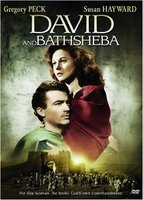
A really good friend of mine was telling me about a Bible study for men that he attended, where they looked at King David's adultery with Bathsheba, the wife of Uriah, as a cautionary tale. David was the only man that Scripture ever refers to as "a man after God's own heart" (1 Sam. 13:14; Acts 13:22) and yet, he later succumbed to the sin of adultery. His lust burned to the point that he had her husband placed in a dangerous situation in battle, an act that brought about his death. David was punished for his sin; God removed his protective hand and let David experience what a life apart from Him was like. (It got pretty ugly - for David, his family, and his kingdom.) The lesson of course is not to presume on your own strength. Do not place yourself in tempting situations, and when you feel a twinge of lust don't allow it to take root and grow. Call out to God at that very instant to untangle the knots starting to work their way through your soul. Ask for the grace to look at that beautiful woman the same way that God does.
There is another lesson as well, and this is the kind of thing that can only be seen in hindsight ... how God weaves even our sins into His plan to bring about salvation, our ultimate good. David and Bathsheba, you see, became the parents of Solomon and one of Solomon's descendants was ... that's right, Jesus! David and Bathsheba came together in the darkest way imaginable and yet, their son Solomon had always been in God's mind, always intended as a blessing to Israel (within his own lifetime), and then the entire world (through his descendant, Jesus).
What am I trying to say - that God willed the sin of David and Bathsheba to bring about some greater good? Of course not! What David did was evil, the exact opposite of what God desired. It was horrible and even though David repented and God forgave him, David was still required to pay a temporal price for his sin. (You and I are for our sins as well. See here and here, for more.)
What I am saying is that we have a God Who is bigger than our sin, Who is not limited by it. He sees our sins, our free choices to go against His will; and then in His own utterly incredible way He weaves even those sinful choices into His plans. He is never the author of the evils we perpetrate; but He is the author of the good He is able to create out of our atrocities - the child conceived through adultery, fornication, or even a sin as despicable as rape - that child that, no matter how he or she was conceived, has been woven into God's plan to bless the world. Only God, only God, can do this. He stands outside of space and time and meets our freedom to sin with His own freedom to bless.
So whatever you are dealing with, whatever frustration or injustice - a cheating spouse, an act of violence, an illness, whatever it is - remember that Your Father loves You and that beyond all of our understanding, He is able to weave even this into His eternal plan to save you and this world. That is our Faith. It's written right there in Jesus' family tree (Mt. 1:6-7).
"O the depth of the riches and wisdom and knowledge of God! How unsearchable are His judgments and how inscrutable His ways! ...We know that in everything God works for good with those who love him, who are called according to his purpose." (Rom. 11:33; 8:28)
There is another lesson as well, and this is the kind of thing that can only be seen in hindsight ... how God weaves even our sins into His plan to bring about salvation, our ultimate good. David and Bathsheba, you see, became the parents of Solomon and one of Solomon's descendants was ... that's right, Jesus! David and Bathsheba came together in the darkest way imaginable and yet, their son Solomon had always been in God's mind, always intended as a blessing to Israel (within his own lifetime), and then the entire world (through his descendant, Jesus).
What am I trying to say - that God willed the sin of David and Bathsheba to bring about some greater good? Of course not! What David did was evil, the exact opposite of what God desired. It was horrible and even though David repented and God forgave him, David was still required to pay a temporal price for his sin. (You and I are for our sins as well. See here and here, for more.)
What I am saying is that we have a God Who is bigger than our sin, Who is not limited by it. He sees our sins, our free choices to go against His will; and then in His own utterly incredible way He weaves even those sinful choices into His plans. He is never the author of the evils we perpetrate; but He is the author of the good He is able to create out of our atrocities - the child conceived through adultery, fornication, or even a sin as despicable as rape - that child that, no matter how he or she was conceived, has been woven into God's plan to bless the world. Only God, only God, can do this. He stands outside of space and time and meets our freedom to sin with His own freedom to bless.
So whatever you are dealing with, whatever frustration or injustice - a cheating spouse, an act of violence, an illness, whatever it is - remember that Your Father loves You and that beyond all of our understanding, He is able to weave even this into His eternal plan to save you and this world. That is our Faith. It's written right there in Jesus' family tree (Mt. 1:6-7).
"O the depth of the riches and wisdom and knowledge of God! How unsearchable are His judgments and how inscrutable His ways! ...We know that in everything God works for good with those who love him, who are called according to his purpose." (Rom. 11:33; 8:28)
Labels:
abortion,
adultery,
Bathsheba,
David,
fornication,
Jesus,
mortal sin,
penance,
providence,
punishment,
rape,
reparation,
salvation,
Scripture,
sin
Monday, June 30, 2008
The Symmetry of Penance
Do our failings ever "just go away," just disappear, without our ever having to address them?
On the night before Jesus died, as He was being interrogated by the high priest, Peter was outside in the courtyard, warming himself at a charcoal fire with the high priest's servants and officers. That charcoal fire was the setting for Peter's three denials (Jn.18:17-18, 25-27).
It was no coincidence then when Jesus, after His resurrection, invited Peter around another charcoal fire, and asked him three times whether he loved Him (Jn.21:9-17). Cruel on Jesus' part? No, He loved Peter. He had already forgiven him for his denials. This was part of Peter's healing from his sin - a penance.
Penance is meant to undo the damage of ours sin. The scene of Peter's denial is recreated, and his professions of love put in place of the denials; there is symmetry. In our own lives we rarely see it as perfectly as in Peter's, but it is a reality; and if we try to avoid it we are hindering our own progress. Think about it: which of our problems really "just go away?" Isn't there always a need to turn and confront them? Don't we have to deal with our failings and make amends before we can truly move on? God has forgiven us, but there is still a need to deal with the consequences of our sins.
It was no coincidence then when Jesus, after His resurrection, invited Peter around another charcoal fire, and asked him three times whether he loved Him (Jn.21:9-17). Cruel on Jesus' part? No, He loved Peter. He had already forgiven him for his denials. This was part of Peter's healing from his sin - a penance.
Penance is meant to undo the damage of ours sin. The scene of Peter's denial is recreated, and his professions of love put in place of the denials; there is symmetry. In our own lives we rarely see it as perfectly as in Peter's, but it is a reality; and if we try to avoid it we are hindering our own progress. Think about it: which of our problems really "just go away?" Isn't there always a need to turn and confront them? Don't we have to deal with our failings and make amends before we can truly move on? God has forgiven us, but there is still a need to deal with the consequences of our sins.
Subscribe to:
Posts (Atom)